

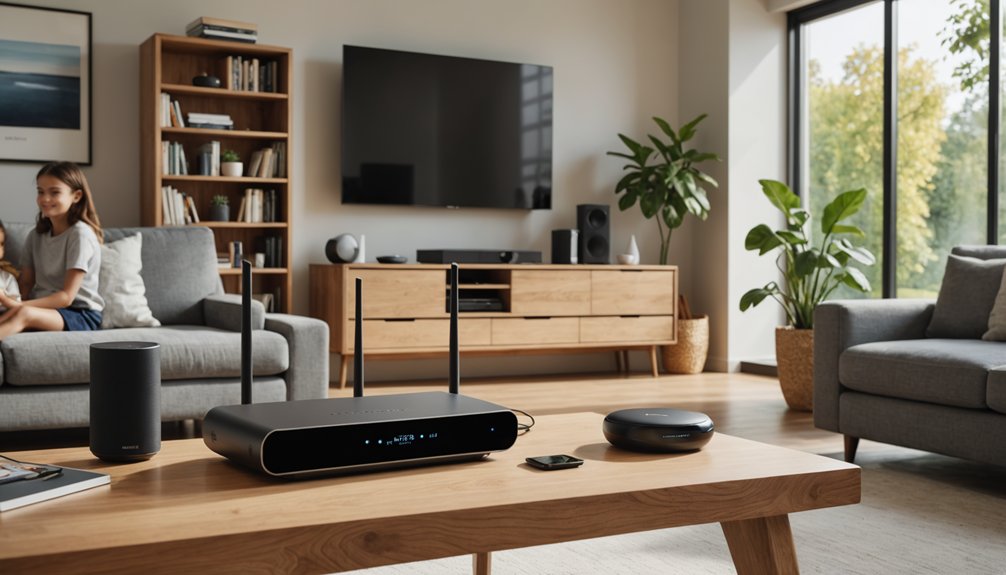

Selecting the right home Wi-Fi system can profoundly impact one’s internet experience. Key features to ponder include advanced speed and bandwidth capabilities, offering swift data transfers and minimized lag. Coverage and range are vital, often enhanced by mesh networking and beamforming technologies. Guaranteeing device compatibility and robust security measures like firewalls are essential. Ease of setup and future scalability add convenience, while a reasonable price affords value. Discover how these elements transform connectivity.
Key Takeaways
- Ensure the system supports Wi-Fi 6 for faster data transfer rates and reduced latency.
- Look for advanced coverage technologies like mesh networks to overcome physical barriers and ensure wide range.
- Select a system with strong device compatibility to connect multiple gadgets seamlessly.
- Prioritize robust security features, including a well-configured firewall and malware protection.
- Choose a system with an intuitive setup and management interface, scalable expansion, and cost-effective pricing.
Speed and Bandwidth
How does a home’s Wi-Fi system manage to keep up with the increasing demand for speed and bandwidth?
It achieves this by optimizing Internet speed and improving wireless throughput, essential for modern households where multiple devices connect simultaneously.
Advanced Wi-Fi systems incorporate the latest technologies, such as Wi-Fi 6, which enhances data transfer rates and reduces latency, guaranteeing seamless streaming and gaming experiences.
Prioritizing wireless throughput allows the system to efficiently handle large data loads, providing a smooth and uninterrupted connection.
This guarantees that everyone in the household can enjoy a sense of belonging, staying connected without frustrating lags or buffering.
Selecting a Wi-Fi system with robust speed capabilities fosters an environment where digital interactions and entertainment are effortlessly supported.
Coverage and Range
A home’s Wi-Fi system must guarantee wide coverage and excellent range to meet the demands of modern connectivity.
In today’s world, seamless internet access across every room is no longer a luxury but a necessity. Achieving this requires overcoming physical barriers such as walls and floors that can hinder signal strength.
Effective Wi-Fi systems are designed to minimize these obstacles by utilizing advanced technologies like beamforming, which focuses signal direction, and mesh networks, which extend coverage through multiple nodes.
Additionally, interference reduction is vital in ensuring a stable connection. By mitigating disruptions from other electronic devices or neighboring networks, a robust Wi-Fi system fosters a sense of community and belonging, enabling users to stay connected, informed, and engaged in their digital lives.
Device Compatibility
Guaranteeing device compatibility is a critical aspect of a home Wi-Fi system’s performance.
A system that supports a wide range of wireless standards certifies seamless device pairing, creating a harmonious environment for all connected gadgets. Modern homes often contain a myriad of devices ranging from smartphones to smart home appliances, each requiring reliable connectivity.
A Wi-Fi system capable of adapting to different wireless protocols certifies that no device is left behind, fostering a sense of belonging among users and their tech. When evaluating potential systems, consider those supporting the latest standards like Wi-Fi 6, which offers improved efficiency and speed.
Security Features
In the domain of home Wi-Fi systems, robust security features are paramount to safeguarding personal data and guaranteeing privacy.
A well-configured firewall serves as the first line of defense, protecting the network from unauthorized access and potential threats. It is essential for users to understand how to adjust firewall settings to create a secure environment tailored to their needs.
Malware protection further fortifies the network by detecting and neutralizing malicious software that could compromise devices.
This dual-layered approach of firewall configuration and malware protection provides an exhaustive shield, fostering a sense of security and belonging within the digital community. As users navigate the interconnected world, these security features guarantee peace of mind, allowing them to focus on what truly matters—staying connected safely.
Ease of Setup and Management
Setting up and managing a home Wi-Fi system should be a straightforward process, empowering users to enjoy seamless connectivity without unnecessary complications.
Modern systems offer intuitive visual interfaces that guide users through the setup, making the process less intimidating. A well-designed interface fosters a sense of belonging, as users feel more connected to their technology and community.
Mobile app support further simplifies management, allowing users to monitor and control their network from anywhere. This flexibility confirms that users can quickly address any connectivity issues, enhancing overall satisfaction.
A system that is easy to manage not only improves user experience but also encourages confidence in maintaining their digital environment, creating a harmonious balance between technology and everyday life.
Scalability and Mesh Networking
A well-designed home Wi-Fi system should offer scalability and incorporate mesh networking technology to meet the evolving needs of users.
Such systems empower households by ensuring seamless connectivity throughout every corner of a home. Scalability allows users to expand their network effortlessly as their needs grow, accommodating more devices without compromising performance.
Mesh networking plays a pivotal role by using multiple nodes to blanket the entire residence with robust signal strength, eliminating dead zones. Additionally, advanced features like network segmentation enhance security by isolating devices, while Wi-Fi channel bonding boosts speed and bandwidth efficiency.
Together, these features create a harmonious network environment that fosters a sense of community and shared experience, allowing everyone to connect and thrive in today’s digital world.
Price and Value
Evaluating the price and value of a home Wi-Fi system involves careful consideration of both upfront costs and long-term benefits.
Consumers often face budget constraints, making it essential to identify systems that offer cost effectiveness without sacrificing quality. A well-chosen Wi-Fi system can provide a sense of belonging by connecting households seamlessly, guaranteeing everyone’s needs are met.
Comparing prices against features like speed, coverage, and support helps verify the chosen system maximizes value. Additionally, factoring in potential upgrades and future scalability can prevent unnecessary expenses down the line.
Conclusion
In selecting a home Wi-Fi system, prioritizing speed and bandwidth guarantees a seamless internet experience, while extensive coverage and range eliminate dead zones. Compatibility with various devices and robust security features protect and enhance connectivity. The ease of setup and management, combined with scalability through mesh networking, offers convenience and adaptability to future needs. Finally, a balance between price and value certifies that the chosen system meets both budgetary constraints and performance expectations.