

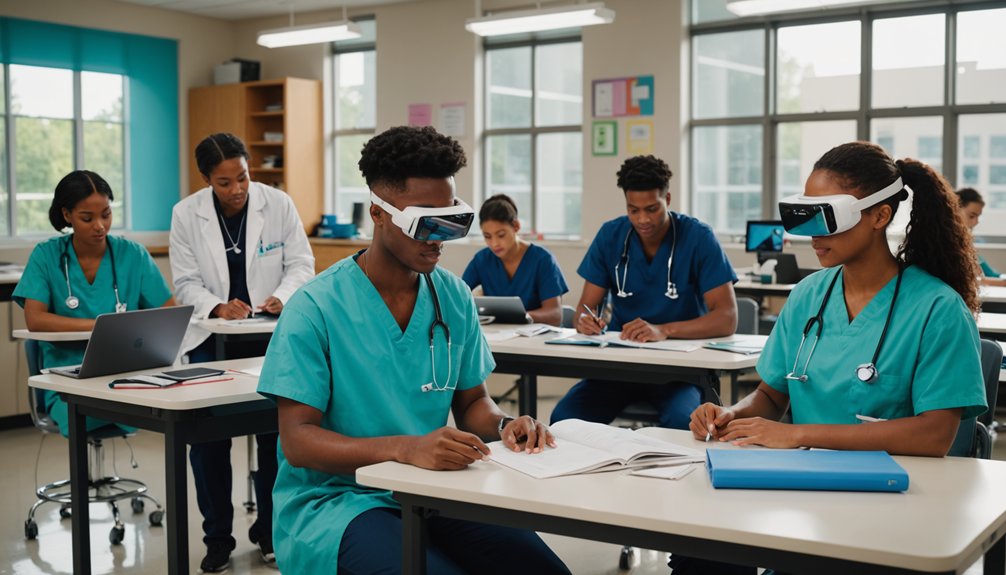

In the rapidly evolving landscape of healthcare and technology, selecting the right college major is vital for a rewarding career. Fields such as Computer Science, Nursing, and Health Informatics top the list, offering diverse opportunities to innovate and impact patient care. With advancements in AI, data science, and cybersecurity, graduates are positioned to meet the increasing demand for tech-savvy healthcare professionals. Discover how these majors can shape your future in a transforming industry.
Key Takeaways
- Computer Science merges technology and healthcare, enabling innovation in patient data management and diagnostic tools.
- Nursing Informatics combines nursing expertise with data analytics to enhance patient care and operational efficiency.
- Biomedical Engineering applies engineering principles to develop cutting-edge medical devices and solutions.
- Health Informatics focuses on managing medical records effectively, ensuring accuracy and accessibility.
- AI and Machine Learning offer transformative opportunities in precise diagnostics and personalized treatment plans within healthcare.
Computer Science
Computer Science remains one of the most dynamic and influential fields within both healthcare and technology.
This discipline serves as the backbone for innovations that enhance the quality of care and streamline operations.
In healthcare, software development plays a critical role in crafting applications that manage patient data and diagnostic tools, ensuring seamless integration across systems.
Algorithm optimization, another key element, enables faster and more accurate data processing, transforming the way medical professionals access and interpret information.
As students consider their path, they find a sense of belonging in computer science, knowing their contributions are essential to advancing societal welfare.
The field invites those enthusiastic to harness technology’s potential, offering a collaborative environment where creativity meets precision, ultimately impacting lives globally.
Nursing
Nursing stands as a cornerstone of the healthcare system, embodying the essence of patient care and advocacy.
This crucial profession offers a unique blend of science and compassion, serving diverse populations across various settings.
Nursing majors are trained in fundamental skills essential for addressing complex health issues, with a focus on areas like mental health and pediatric care.
Mental health nursing equips students to support patients’ psychological wellbeing, ensuring thorough care.
Pediatric care, on the other hand, emphasizes nurturing young patients through their formative years with specialized attention.
Information Technology
Information Technology (IT) serves as the backbone of modern infrastructure, driving innovation and efficiency across numerous sectors.
In the healthcare industry, IT plays a critical role in managing medical records and enhancing the operation of digital hospitals. By streamlining processes, IT guarantees that patient data is accessible and secure, fostering a seamless flow of information among healthcare professionals.
This integration of technology in healthcare settings not only enhances patient care but also supports the growing trend of telemedicine and remote patient monitoring. IT professionals are pivotal in developing and maintaining these systems, making an IT major a strategic choice for those seeking to impact healthcare positively.
Embracing IT in healthcare signifies a commitment to improving the quality and accessibility of medical services.
Biomedical Engineering
Biomedical Engineering stands at the intersection of healthcare and technology, offering innovative solutions to medical challenges through the application of engineering principles.
This field empowers individuals passionate about both science and community, providing avenues to make tangible impacts through the creation and improvement of medical devices. These devices, from prosthetics to diagnostic equipment, enhance patient care and outcomes.
Additionally, the burgeoning area of tissue engineering opens doors to revolutionary therapies, potentially regenerating damaged tissues and organs.
As a discipline, it invites those who seek to belong to a dynamic community dedicated to advancing healthcare. By integrating cutting-edge technology with medical expertise, biomedical engineering shapes the future of medicine, fostering a sense of purpose among those committed to improving lives.
Health Informatics
Health Informatics serves as a critical bridge between healthcare and technology, leveraging data to enhance patient care and operational efficiency.
This field focuses on the effective management and use of medical records, ensuring accuracy and accessibility for healthcare professionals and patients alike.
By utilizing healthcare analytics, it empowers institutions to make informed decisions, driving improvements in treatment outcomes and resource allocation.
Individuals pursuing a major in Health Informatics will find themselves at the forefront of a rapidly evolving industry, where their skills are essential in transforming raw data into actionable insights.
This career path fosters a sense of community among professionals dedicated to advancing healthcare, offering a promising future for those passionate about making a meaningful impact in both tech and health sectors.
Data Science
Data Science stands as a pivotal discipline in the contemporary landscape of healthcare and technology, offering powerful tools for extracting meaningful insights from vast datasets.
With the integration of data quality metrics, professionals can guarantee the reliability and accuracy of information used in decision-making processes.
In healthcare analytics, data scientists play a vital role in interpreting complex data to improve patient outcomes, streamline operations, and reduce costs.
By analyzing trends and patterns, they empower healthcare providers to make informed decisions, ultimately enhancing care delivery.
Data Science graduates find themselves at the heart of innovation, belonging to a community that bridges technological advancements with practical healthcare applications.
This field offers a sense of purpose and contribution, inviting individuals to shape the future of healthcare and technology.
Radiologic Technology
Radiologic Technology emerges as a critical component in both healthcare and technological domains, where precision and advanced imaging techniques are essential for diagnosis and treatment.
This field offers professionals the opportunity to specialize in various radiology specialties, such as MRI, CT scans, and ultrasound, each requiring a unique set of skills to operate complex medical imaging equipment effectively.
The demand for radiologic technologists continues to grow, reflecting the increasing reliance on diagnostic imaging in modern medicine.
Programs in Radiologic Technology equip students with the knowledge to interpret imaging results accurately, fostering a sense of community among those dedicated to improving patient outcomes.
Aspiring individuals find a fulfilling path in this field, contributing to patient care while advancing their expertise in cutting-edge imaging technologies.
Cybersecurity
Cybersecurity stands as a cornerstone in today’s digital landscape, where protecting sensitive information is paramount.
This field is pivotal for individuals who seek to belong to a community dedicated to safeguarding digital infrastructures. Engaging in cyber threat analysis empowers professionals to identify potential vulnerabilities and anticipate malicious activities.
Network security assessment, another critical component, involves evaluating and fortifying a network’s defenses to safeguard data protection.
Those pursuing a major in cybersecurity are often drawn to the challenge of problem-solving and the satisfaction of contributing to a safer digital world. This discipline offers a fulfilling career path with an ever-growing demand, guaranteeing that graduates find their niche within a supportive and essential industry that prioritizes security and innovation.
Pharmaceutical Sciences
Pharmaceutical sciences represent a critical intersection of health and innovation, focusing on the discovery, development, and regulation of medications.
In this field, students explore drug development pathways that guarantee the safe and effective transformation of laboratory findings into therapeutic solutions.
A deep understanding of medicinal chemistry applications is essential, as it involves designing and synthesizing new compounds that could lead to breakthroughs in treatment.
This major empowers individuals to contribute to life-changing advancements and collaborate with a community dedicated to improving global health.
With rigorous training, students become adept at traversing regulatory frameworks, certifying compliance and safety in drug delivery.
This pathway offers a rewarding career for those seeking to impact healthcare through scientific expertise and a commitment to public well-being.
Artificial Intelligence and Machine Learning
In the dynamic landscape of healthcare and technology, Artificial Intelligence (AI) and Machine Learning (ML) emerge as pivotal forces reshaping how we approach medical challenges.
These fields offer transformative potential in medical imaging, enabling precise diagnostics and personalized treatment plans. As students explore majors in AI and ML, they plunge into a world where algorithms can detect anomalies from vast imaging data, revolutionizing patient outcomes.
However, the integration of AI in healthcare demands a rigorous understanding of AI ethics.
Ethical considerations guarantee that AI applications respect patient privacy, maintain transparency, and avoid biases in decision-making processes. Those pursuing these majors become part of a community dedicated to advancing healthcare technology, fostering a sense of belonging through shared innovation and responsibility.
Conclusion
In summary, selecting a college major at the intersection of healthcare and technology offers a promising career path characterized by innovation and impact. Fields such as Computer Science, Biomedical Engineering, and Health Informatics equip students with the skills needed to advance medical technology and improve patient care. As the demand for tech-savvy professionals in healthcare continues to rise, graduates will find fulfilling opportunities to contribute to a rapidly evolving industry, where their expertise can drive meaningful change and enhance healthcare delivery.