

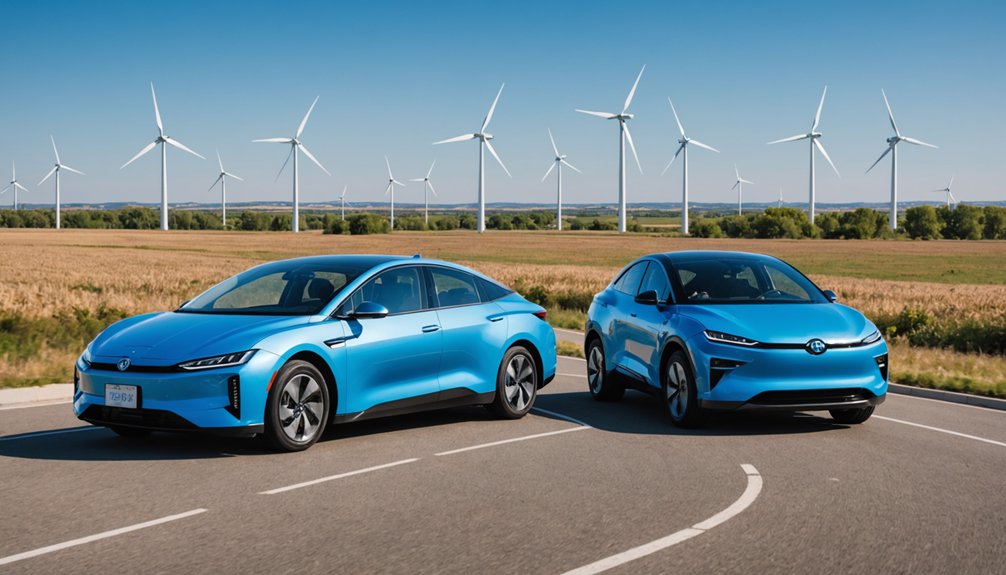

The debate between hydrogen and electric cars hinges on their distinct approaches to energy storage and conversion, environmental impact, and infrastructure needs. Hydrogen vehicles utilize fuel cells to generate electricity from stored hydrogen, while electric cars rely on lithium-ion batteries. Each type of vehicle presents unique benefits and challenges, from carbon footprint considerations to refueling convenience. As the automotive industry progresses, understanding these differences becomes vital for consumers and policymakers alike. What lies beneath these contrasts?
Key Takeaways
- Hydrogen cars use fuel cells to convert hydrogen into electricity, while electric cars rely on lithium-ion batteries for energy storage.
- Electric cars have a lower operational carbon footprint, but lithium-ion battery production generates significant emissions; hydrogen cars emit only water vapor.
- Infrastructure for electric cars is more developed, with widespread charging networks, whereas hydrogen refueling stations are limited.
- Hydrogen vehicles have higher production and refueling costs, while electric cars benefit from fuel incentives and lower long-term ownership expenses.
- Electric cars offer smooth acceleration and superior handling; hydrogen cars provide longer range capabilities for extended drives.
Energy Storage and Conversion Processes
The energy storage and conversion processes of hydrogen and electric cars are fundamentally different.
Hydrogen vehicles utilize fuel cells to convert stored hydrogen into electricity through a chemical reaction with oxygen. This process, known as electrolysis, involves splitting water into hydrogen and oxygen, later recombining them in the fuel cell to produce electricity, water, and heat.
In contrast, electric cars store energy in lithium-ion batteries, which directly power the electric motor. The batteries are recharged using an external power source, drawing electricity from the grid.
Both systems aim to provide efficient energy conversion, but they cater to different infrastructural needs and consumer preferences. Understanding these differences fosters a sense of unity and belonging among those invested in advancing sustainable transportation technologies.
Environmental Impact and Sustainability
Evaluating the environmental impact and sustainability of hydrogen and electric cars involves examining their entire lifecycle, from production to disposal.
Electric vehicles (EVs) tend to have a lower carbon footprint during operation due to their reliance on renewable energy sources. However, the production of lithium-ion batteries can generate significant emissions.
Conversely, hydrogen cars emit only water vapor, offering potential for substantial emissions reduction. Yet, the carbon footprint of hydrogen production, especially when derived from fossil fuels, can be considerable.
Both technologies present sustainability challenges regarding raw material extraction and end-of-life disposal. Ultimately, the environmental benefits of either vehicle type hinge on advancements in cleaner production methods and increased reliance on renewable energy, fostering a collective movement toward reduced emissions.
Infrastructure and Accessibility
Traversing the landscape of infrastructure and accessibility for hydrogen and electric vehicles reveals distinct challenges and opportunities.
Electric cars benefit from widespread charging networks, which have seen exponential growth, particularly in urban areas. This expansion supports a growing community of users who value convenience and availability.
However, rural availability remains a challenge, as sparsely populated areas often lack sufficient charging stations to meet demand.
In contrast, hydrogen vehicles face a different set of issues. The infrastructure for hydrogen refueling is still nascent, with substantially fewer stations available, even in metropolitan areas.
This limits accessibility and hinders broader adoption. Both technologies require strategic development of infrastructure to guarantee widespread and equitable access, fostering a sense of belonging among their respective user bases.
Cost and Economic Factors
Evaluating the cost and economic factors of hydrogen versus electric vehicles reveals distinct financial landscapes for consumers and manufacturers.
Electric vehicles (EVs) often benefit from established fuel incentives, making them more appealing to environmentally conscious consumers. These incentives can mitigate higher initial purchase prices, thereby reducing overall ownership costs over time.
Conversely, hydrogen vehicles face higher production costs due to limited infrastructure and scaling challenges, resulting in elevated market prices. Ownership costs for hydrogen vehicles include higher refueling expenses, as hydrogen fuel remains less economical due to its production and distribution complexities.
Both vehicle types require consideration of long-term savings potential and environmental impact. Ultimately, understanding these cost dynamics is vital for consumers seeking affordable and sustainable transportation solutions within their communities.
Performance and Driving Experience
When analyzing the performance and driving experience of hydrogen versus electric vehicles, several key differences emerge.
Electric vehicles (EVs) are renowned for their smooth acceleration, providing an instantaneous torque that enhances the driving experience. This characteristic is particularly advantageous in urban settings, where quick acceleration is beneficial.
In contrast, hydrogen vehicles, while offering impressive performance, may not match the instant acceleration of EVs due to their reliance on fuel cell technology.
Racing dynamics further distinguish these vehicles. Electric vehicles, with their lower center of gravity, often exhibit superior handling and stability, making them well-suited for racing environments.
Hydrogen vehicles, on the other hand, offer longer range capabilities, which can be advantageous for extended drives. Consequently, each vehicle type presents unique performance attributes that cater to different driving preferences.
Conclusion
In comparing hydrogen and electric vehicles, each technology presents unique advantages and challenges. Hydrogen cars excel in rapid refueling and zero emissions, though they face infrastructure limitations. Electric vehicles benefit from established charging networks and lower operational carbon footprints, yet grapple with battery production impacts. Cost considerations reveal hydrogen’s current higher expense against electric’s growing affordability. Ultimately, the choice hinges on individual priorities, technological advancements, and infrastructure development, shaping the future of sustainable transportation.